
Such outrages on common decency
Reading Agnes Strickland’s Lives of the Queen’s of England

A spoiler alert: if you are on the Wolf Crawl journey with Simon Haisell and you haven’t read Hilary Mantel’s Thomas Cromwell Trilogy before or are unfamiliar with this period of English history, please be aware that my work draws on the Trilogy as a whole as well as the historical record.
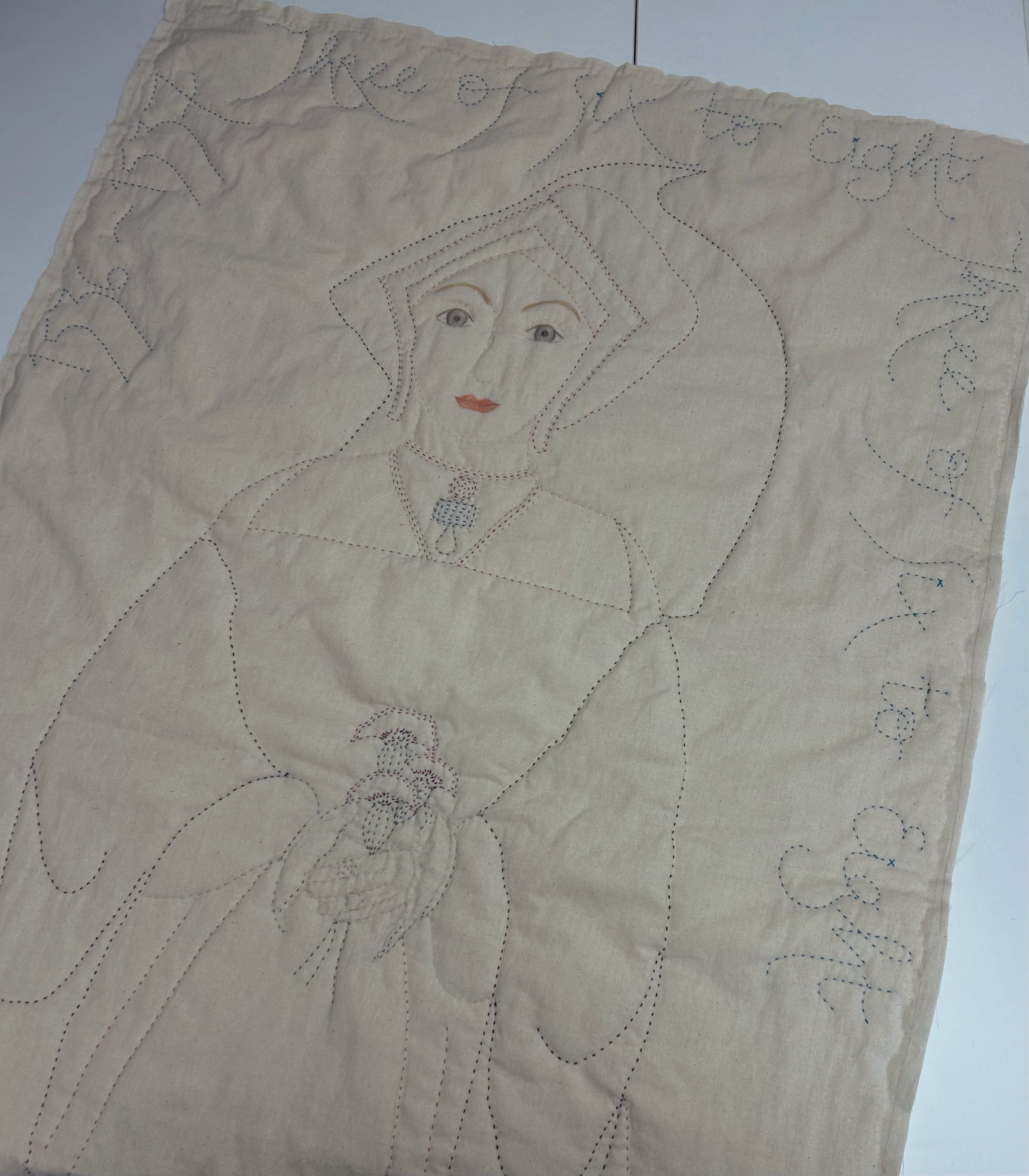
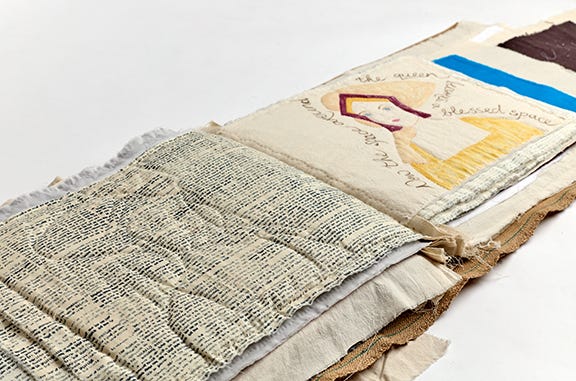
I continue to dip in and out of Agnes Strickland’s Lives of the Queens of England (1842) as I sort out my portraits of Cromwell’s four (or four of six of Henry VIII’s) queens ready for my Stitching Cromwell exhibition in March. The exhibition pieces are nearly finished - I have a large portrait of Cromwell himself to complete - and I have a to-do list as long as my arm in preparation but I am looking forward to showing the work, and stitching alongside it. (The exhibition will be at The Hive in Worcester from 2 - 6 March inclusive, and I will be giving a lecture about the project on Wednesday 4 March at 4.30pm. Tickets for the lecture are available here.)
As I outlined in Katharine, the Friendless Queen, Strickland’s work may come across as somewhat dry today, but her determination to see State Papers - which were then not available to the public - and her approach to archival research was truly groundbreaking. Her opinions are also interesting - and sometimes unexpected. Given her dislike of Anne Boleyn, who she considered driven by “vanity and ambition”, I was sure that Strickland would approve of Jane Seymour, who is often portrayed as meek, obedient, and without guile. I could not have been more wrong. Strickland was deeply disapproving of Jane Seymour, considering her to have committed outrages on common decency:
Jane Seymour‘s shameless conduct in receiving the courtship of Henry VIIII was the commencement of the severe calamities that befel her mistress, Anne Boleyn. Scripture points out as an a special odium the circumstances of a handmaid taking the place of her mistress […] She received the addresses of her mistress‘s husband, knowing him to be such.
One of Strickland’s main criticisms relates to the timing of Jane’s marriage to Henry. Anne Boleyn was executed on 19 May 1536 and Henry was betrothed to Jane the following day, with their marriage taking place on 30 May 1536. To Strickland, Jane’s acceptance of the King’s advances during Anne’s destruction, becoming his “bride” within 24 hours of her predecessor’s death, and taking Anne’s place before her body was cold, are all proof of her immorality:
The wedding cakes must have been baking, the wedding dinner providing, the wedding clothes preparing, while the life blood was yet running warm in the veins of the victim whose place was to be rendered vacant by a violent death.
The fates of Henry’s six queens (and Cromwell’s four) can still be traced in the historical record. Strickland notes that the haste of the Seymour marriage can be seen in an unexpected place:
The abhorrent conduct of Henry in wedding Jane so soon after the sacrifice of her hapless predecessor, has left its foul traces on a page where truly Christian reformers must have viewed it with grief and disgust. In the dedication of Coverdale‘s Bible, printed at Zürich, 1535, the names of Henry and his queen are introduced; but as Anne Boleyn was destroyed between the printing and publication, an attempt was made to accommodate the dedication to the caprice of Henry’s passions by printing J for Jane over the letters which composed the name of the unfortunate Anne.
Given Anne’s commitment to religious reform, this overprinting feels particularly cruel.
How much agency Jane Seymour had with regard to the speed of her betrothal and marriage is debatable. In fact, how much agency she had overall is a question that still divides historians (and writers of fiction) - and there is little in the archival record that can provide any sort of answer. Strickland notes that “she passed eighteen months of regal life without uttering a sentence enough to bear preservation.” But in the hands of an excellent writer, this silence can be put to good use. One of the many pleasures of Hilary Mantel’s Cromwell Trilogy is the ambiguity with which Jane is written. Is she entirely innocent, entirely good, entirely submissive? Or is there a calculating mind at play? Would Jane leave a threatening note in Anne’s bed? We can never be sure. In Hilary Mantel’s telling, Jane’s words and actions are slippery, and I feel never quite sure who she is.
I might feel unsure of Jane, but I am entirely sure that one of the most beautiful things I have ever seen is an item of paperwork associated with Jane Seymour. It is a roll dating from the late 1530s detailing particulars of the accounts of Thomas Cromwell and Ralph Sadler, in their post as joint Keepers of the Hanaper. Their names are readable in their Latin forms in this roll, decorated with the loveliest of silverpoint drawings:
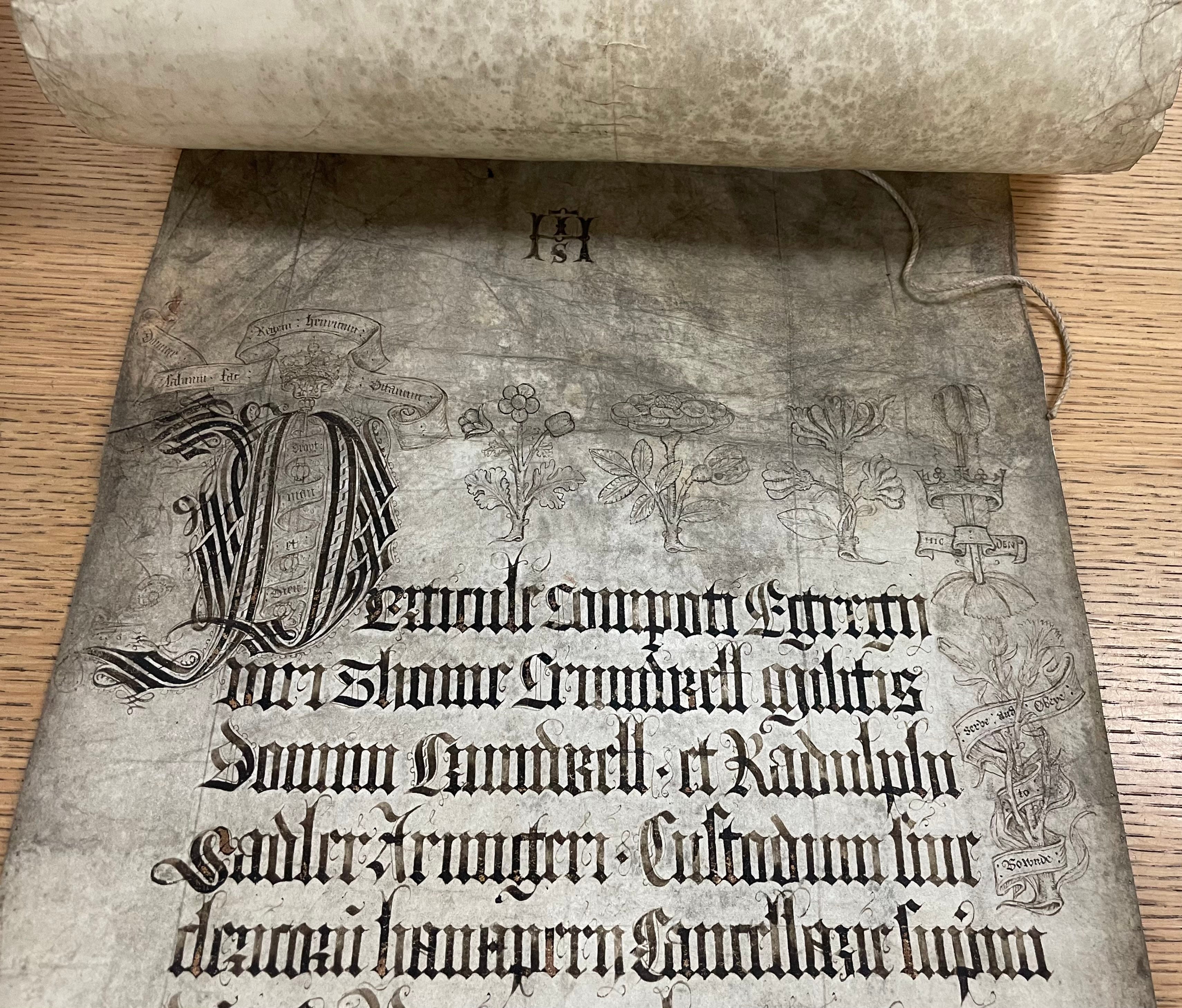
To the right of the roll is Queen Jane Seymour’s motto (“Bound to serve and obey”), adorned with feather, crown, and carnations. The archive catalogue dates this roll to between April 1538 and April 1540, but the presence of Jane’s motto makes me question this. Was Jane’s presence still being felt - on paper - after her death in October 1537? Or was the document drawn up before she died? Cromwell and Sadler were both in post at the Hanaper from 1535 onwards so either is possible.
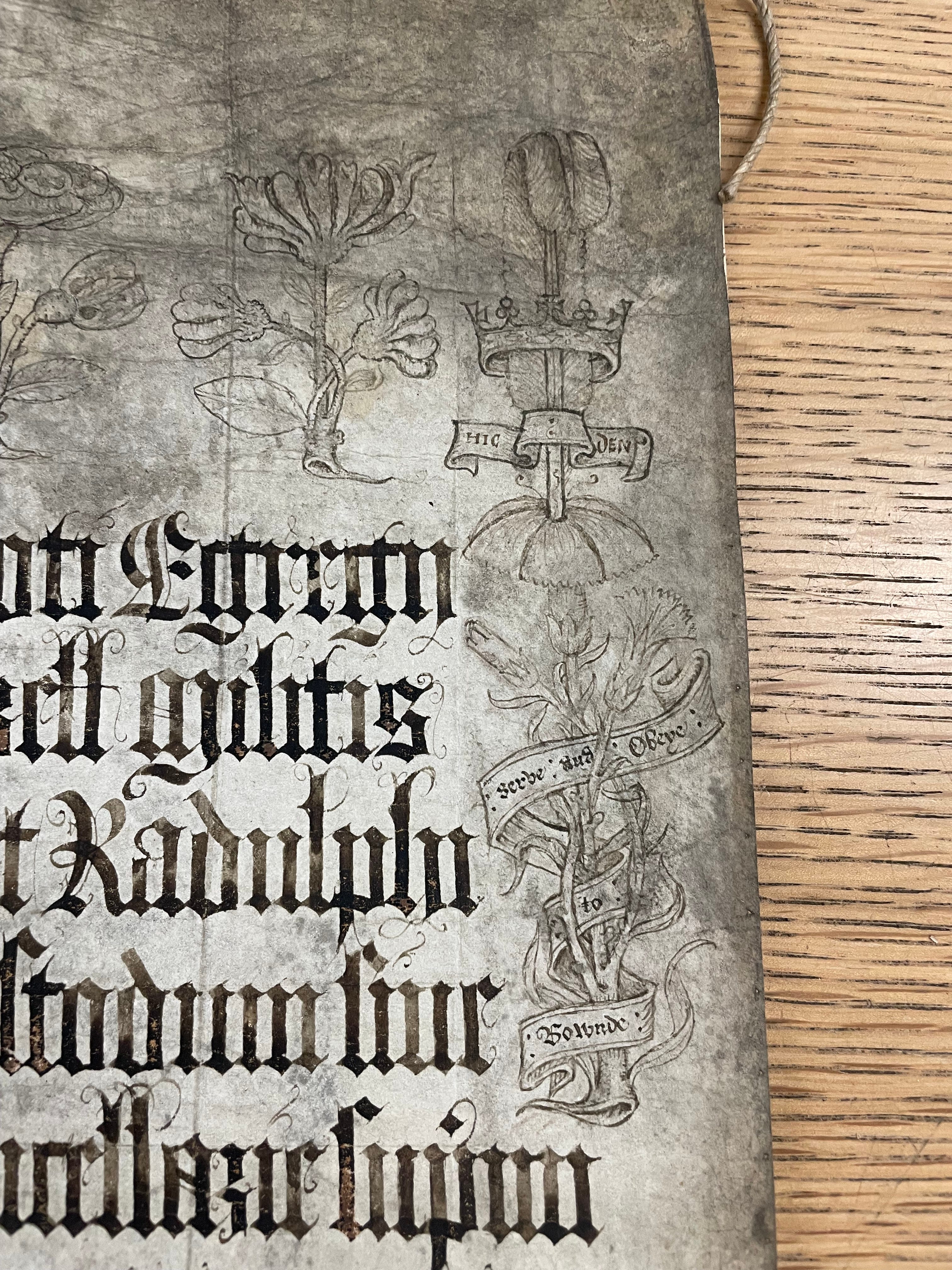
Whatever the date of the document, it is referenced in my latest stitched portrait of Jane. She is holding three carnations, and these are a nod to the carnations in the Hanaper roll. And they are also, of course, a reminder of the carnation-embroidered dress she wears in Hilary Mantel’s Bring Up the Bodies.
It is an ambition of mine to become good enough at drawing to have a go at silverpoint...!
Somewhat surprised to find the main characters in my latest post were Agnes Strickland’s sisters. What a family!