
“There can be relocation; there can be pensions.”
Stitching the Religious

When we think of the Dissolution of the Monasteries, I think we tend to think of ruined buildings: the physical remains of the church institutions. We can visit what’s left standing, see the outlines of particular buildings, and view an artist’s impressions of the refectory or the infirmary. A church might still stand within the original grounds. Or sometimes, we visit a cathedral and see monastic ruins nearby. Or we can find a street name - such as Greyfriars - that indicates that once there were monks.
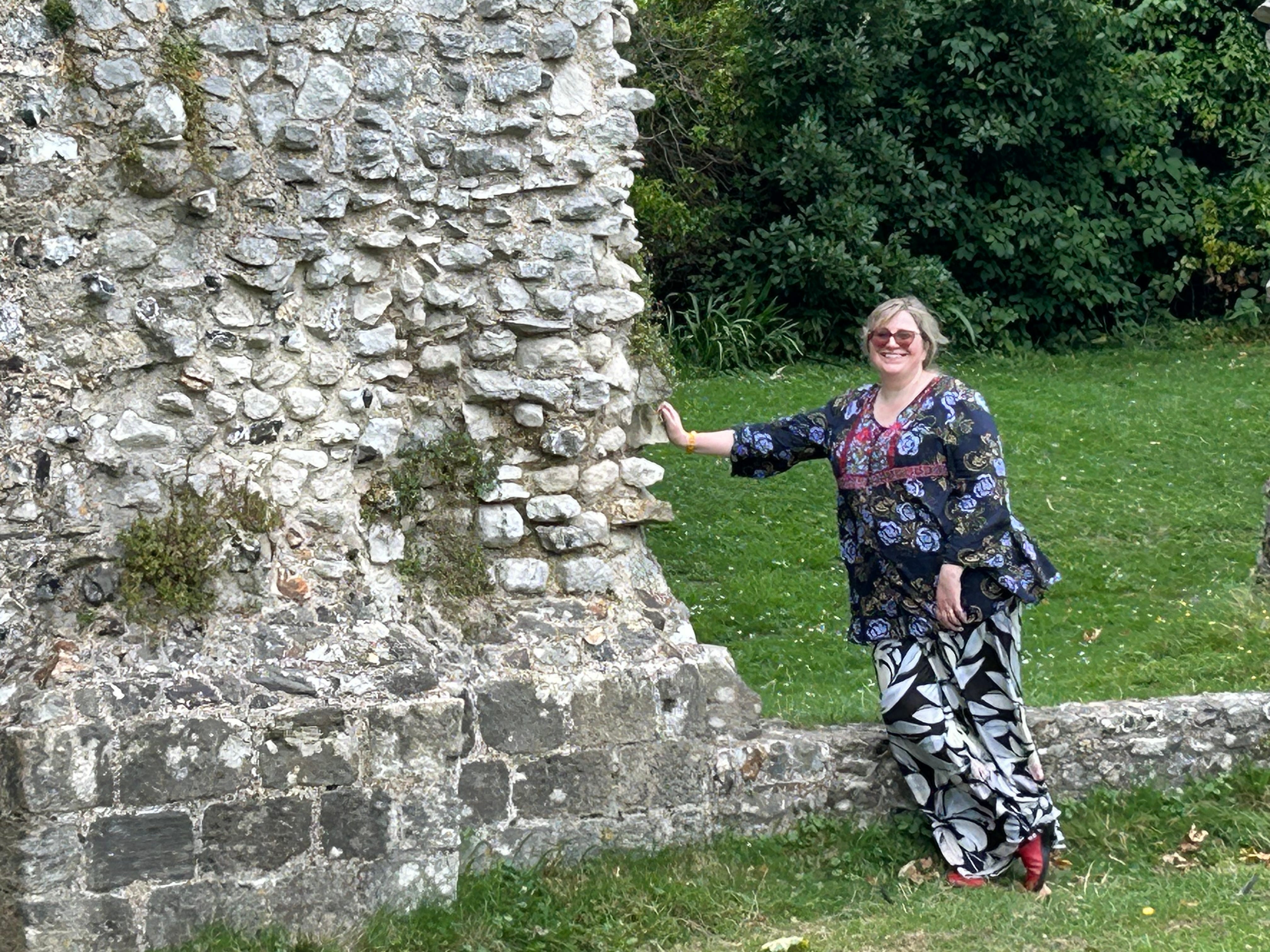
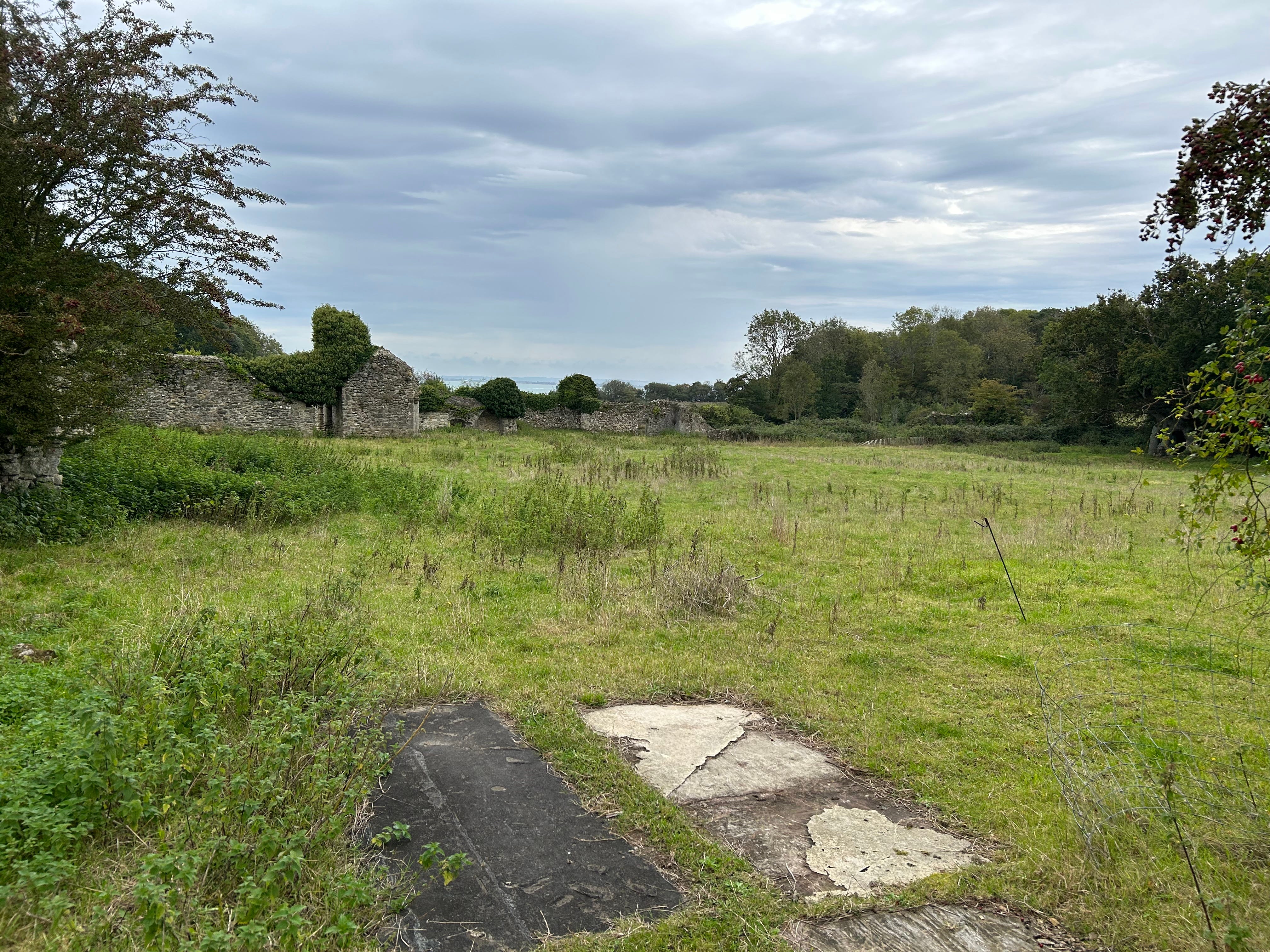
In recent months, I have been spending time thinking about religious houses. Looking at old maps and seeking out outdated guidebooks, and thinking about what remains. When in the archives, I often see documents relating to the religious houses. For a number of years, I put many such documents to one side (unless it was correspondence sent directly to or from Thomas Cromwell himself). It’s largely outside the scope of my Letters to Cromwell research, which is, frankly, overwhelming enough in its scale and complexity.
But. Early in Hilary Mantel’s Wolf Hall, there is a scene between Cromwell and his mentor, Cardinal Wolsey. Cromwell has just returned from Yorkshire in 1529, where he has been overseeing Wolsey’s unpopular project to close or merge a selected number of smaller religious houses. As Wolsey tells his man Cromwell:
‘No one is proposing to put old monks out on the roads.’ This is true. There can be relocation; there can be pensions, compensation. It can be negotiated with goodwill on both sides.’
A few years later, a much larger and more radical “reorganisation” of the religious houses was underway. Following the 1534 valuation of the church’s wealth (resulting in the Valor Ecclesiasticus) - the suppression of the monasteries (and distribution of the spoils) gathered pace between 1536 and 1540, with Cromwell now in charge, and rather less thought of goodwill on both sides.1
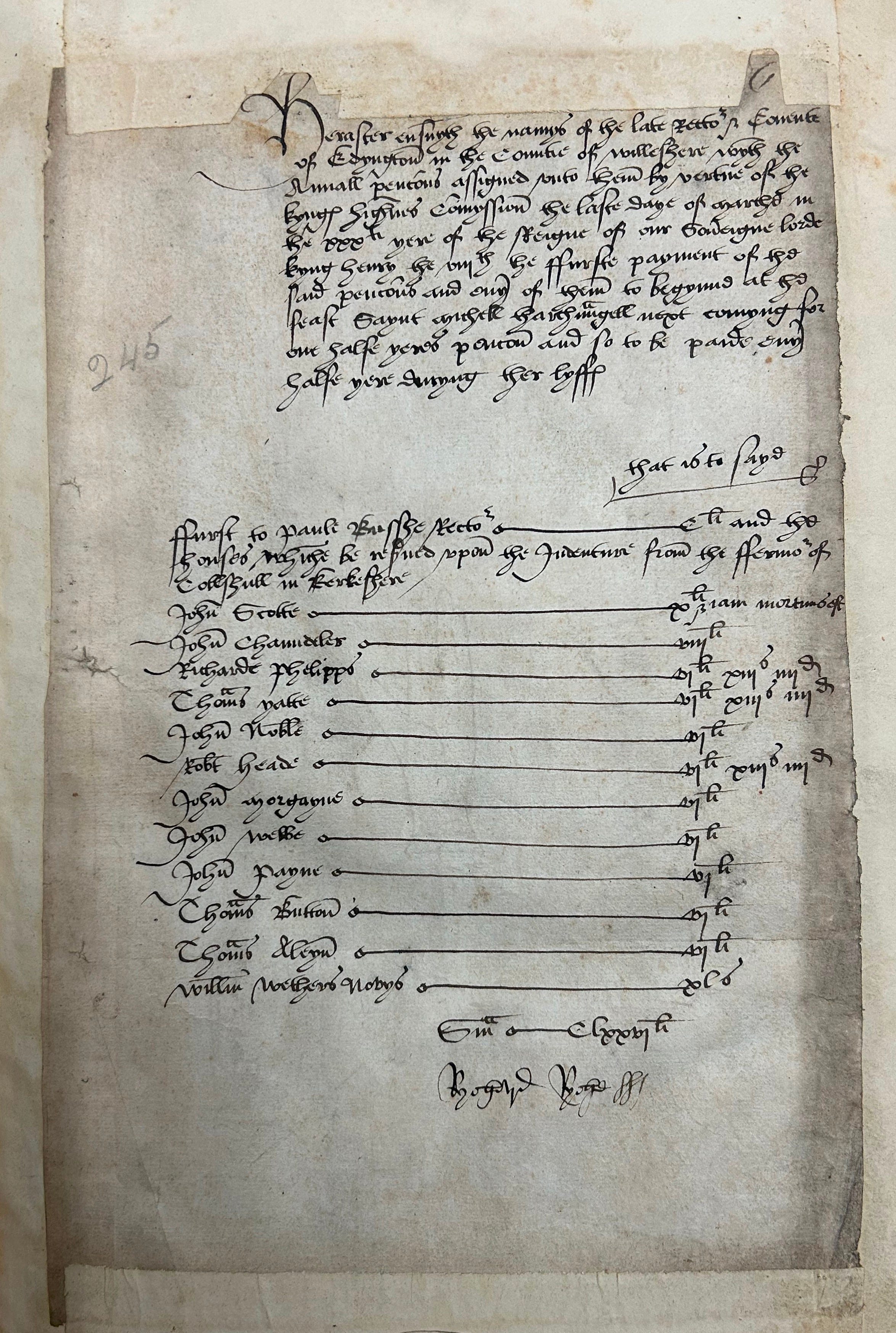
Wolsey’s pensions comment stayed in the back of my mind, and, while I hadn’t been making detailed notes of documents relating to religious houses, I had started to pay more attention to those documents listing the names of the “religious” for pensions purposes - the names of men and women who lived in monasteries, priories, abbeys, convents, hospitals. And those names began to haunt me.
An idea began to form. Could I trace as many of possible of these people whose lives were turned upside down when their houses were surrendered in the late 1530s? With approximately 800 religious houses dissolved, maybe not - but I could make an attempt. Once upon a time, I would have included ambitious plans to take lists to the site to which they relate. But I’m reluctantly having to adjust this concept; I don’t drive, and not many sites are otherwise accessible. Guidebooks may tell me the nearest railway station, but usually add that the site is a distance away - often miles - over fields, or up steps. So my osteoarthritis is in the way (again) but I will find a meaningful alternative in due course.
The stitched lists have started with Edington Monastery in Wiltshire.2 Why Edington? Well, it happens to be the first page of one of the bound volumes of papers relating to the Dissolution, and I had to start somewhere. Edington took two days of applied stitches and ink - a scary indication of the scale of this work. But enough of the challenges. For now, let us remember the names of Paul Busshe, John Scotte, John Chaundeler, Richard Phillips or Phelyppes, Thomas Yatte, John Noble, Robert Heade, John Morgayne, John Webbe, John Payne, Thomas Button, Thomas Aleyn, and William Wethers or Whethers - the Bonhommes of Edyington.
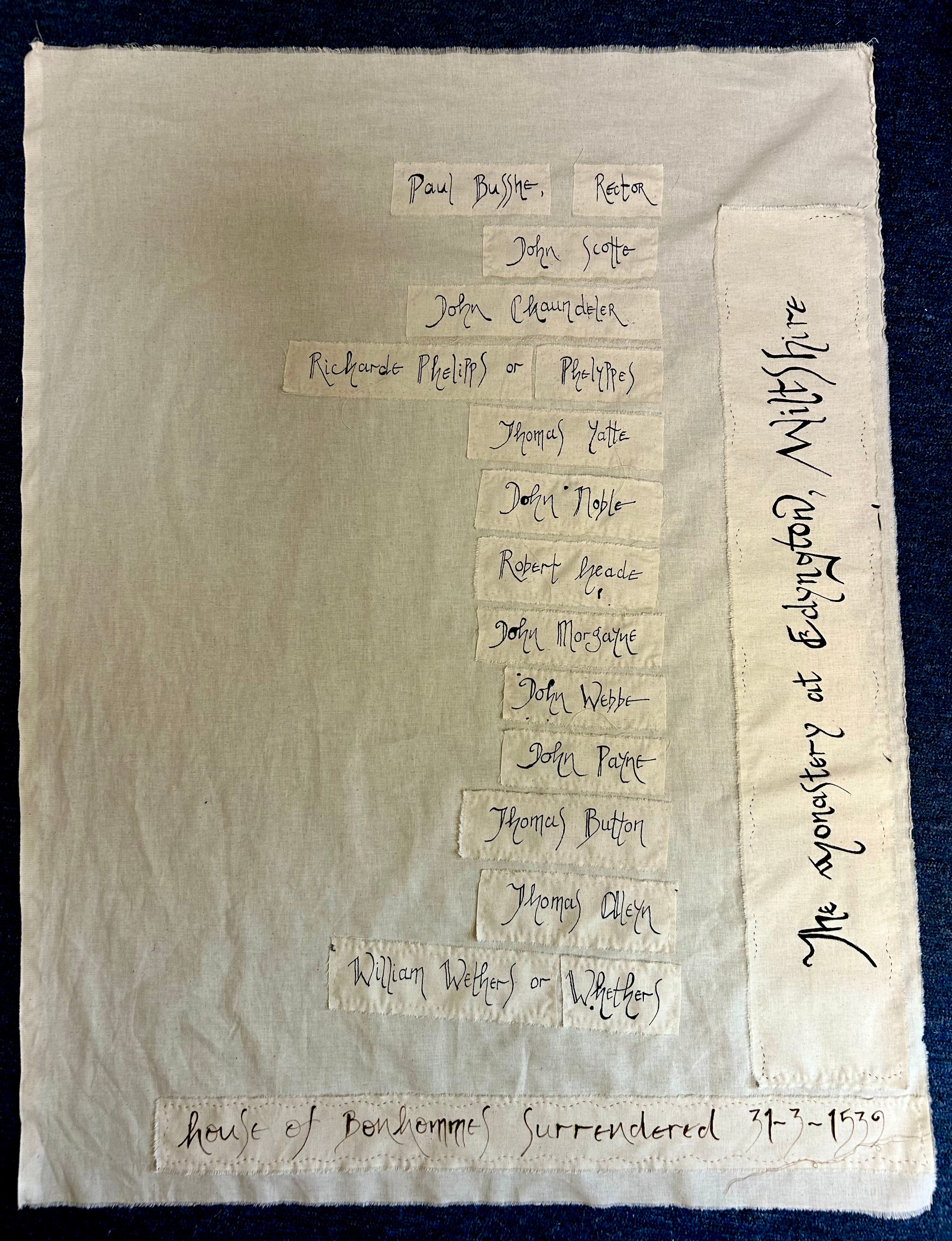
In this piece, I am providing a brief background to my Stitching the Religious project.This is therefore not the place for a detailed account of the Dissolution, nor am I qualified to write one, but if you would like an expert account, The Dissolution of the Monasteries: A New History by James G Clark (2021), is well worth seeking out.
I’m not yet sure of the final form that this work will take, but I have made sure to leave enough fabric to bind the lists together into a (very large and unmovable) book, should I wish.
Dear Bea - a great project - have you discovered what happened to the 'Bonhommes' at Launde Abbey in Leicestershire before Gregory Cromwell took possession?
❤️ thank you